Hand-off Framework
On my pawnshop project, changes came by word of mouth and nothing was written down, so it was hard to track what had changed.
On my next project, a donation platform for a bank, I didn’t wait for a spec. I wrote one. I turned a one-line feature list into a sheet of every case for every user, drew each flow before designing the screens, and built the prototype from those flows. Two engineers and two PMs worked from it.
I wrote the case sheet, drew every swimlane and designed every screen and prototype. The PM wrote the feature list I started from. Jira came later and was set up by others, so it isn't part of this case.

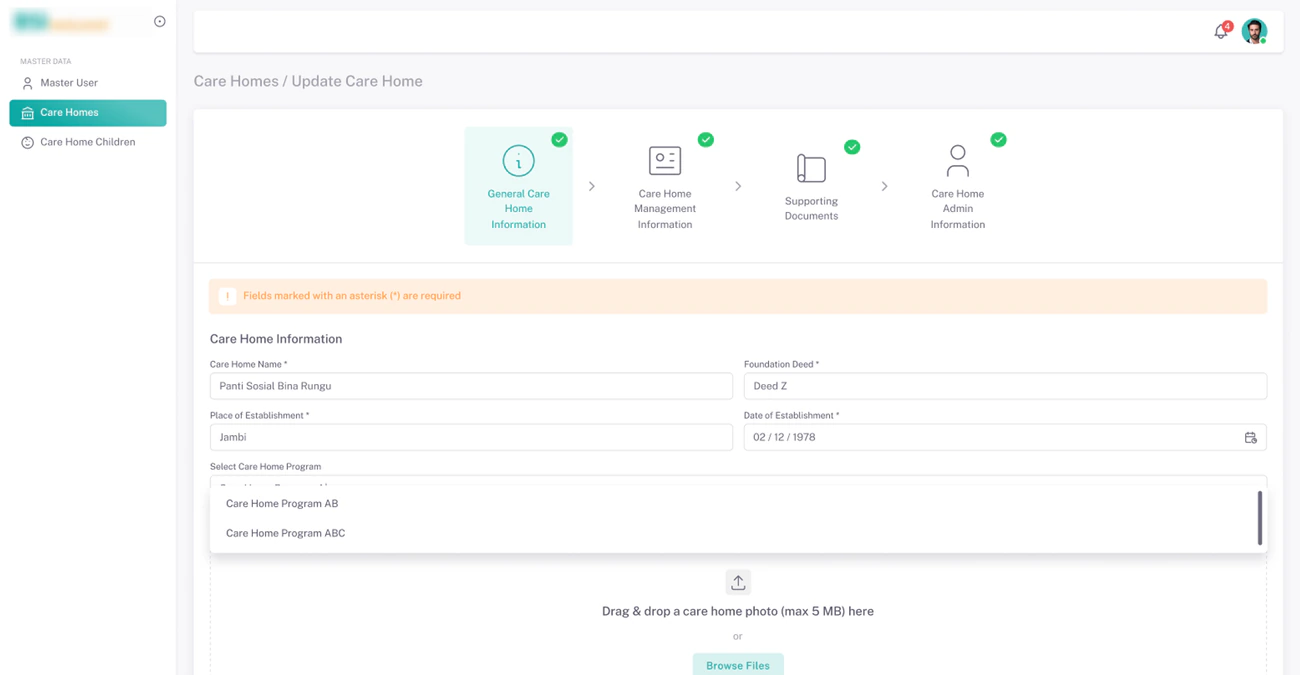
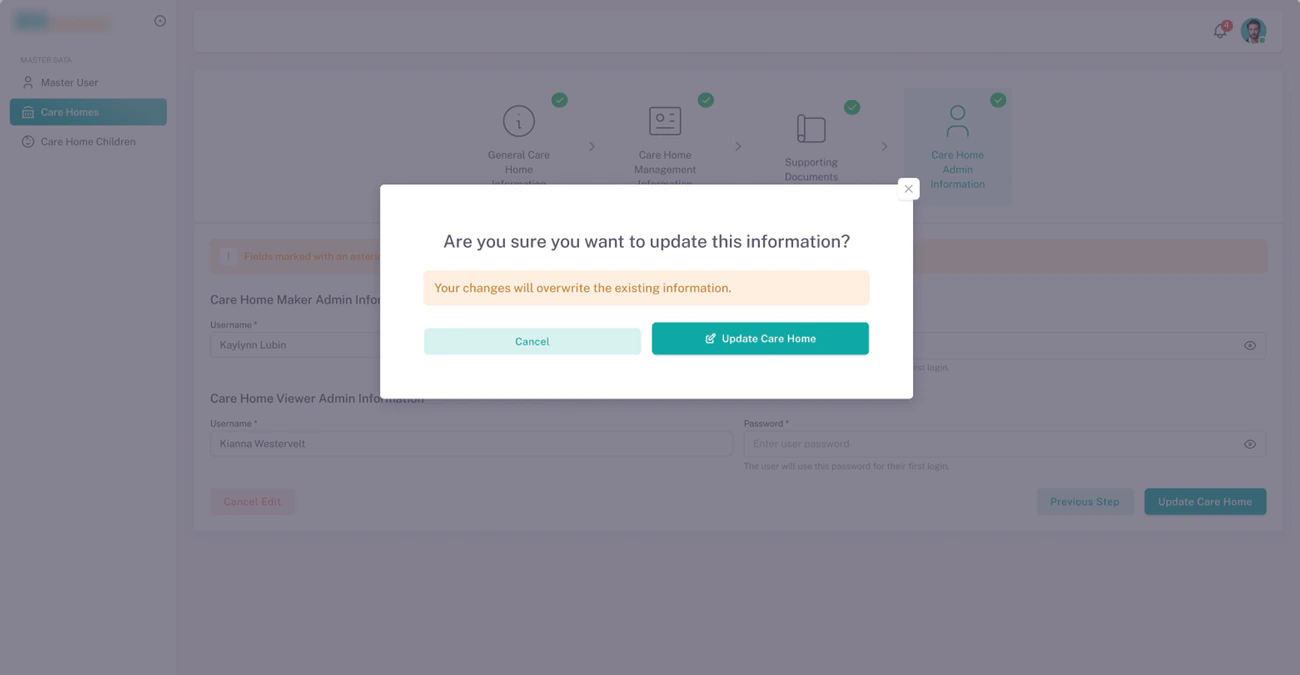
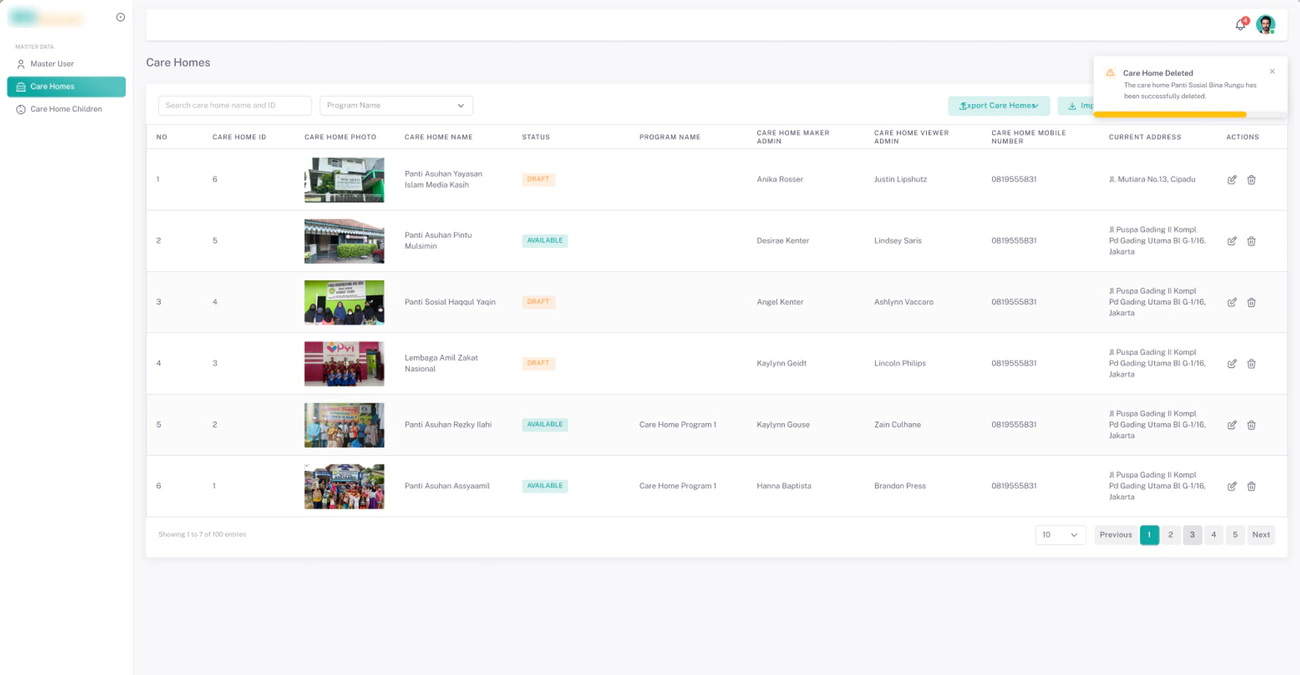
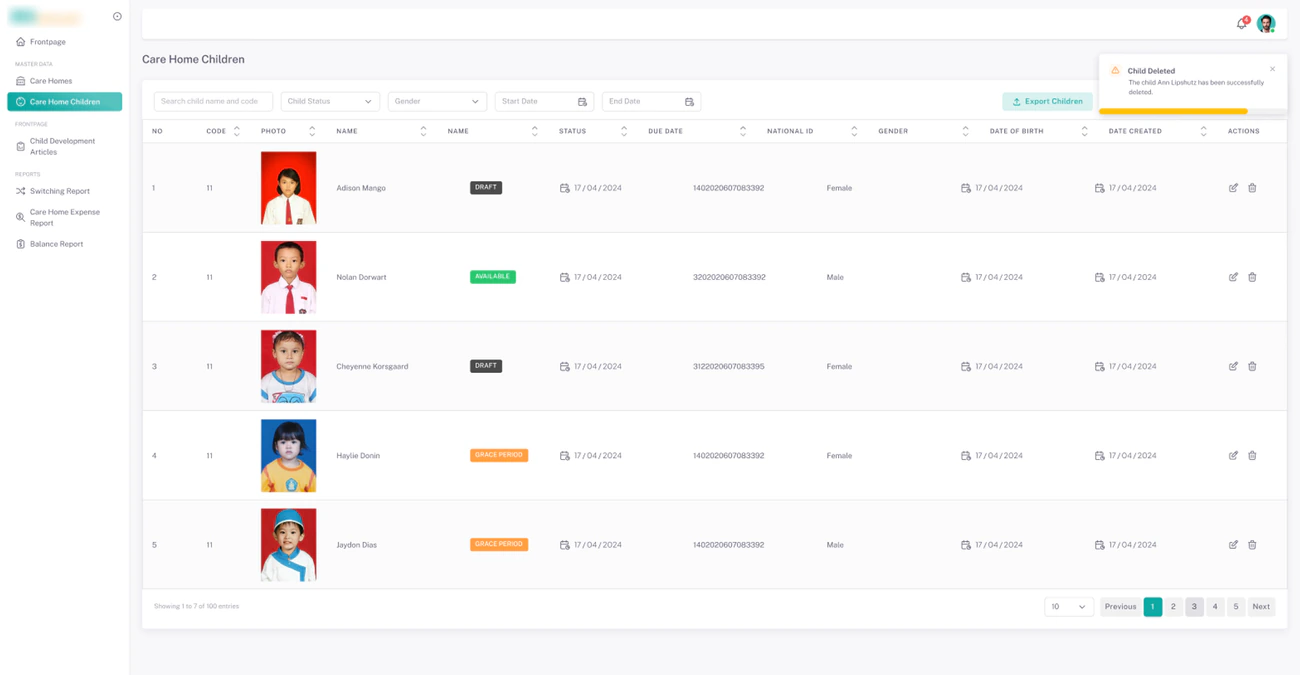
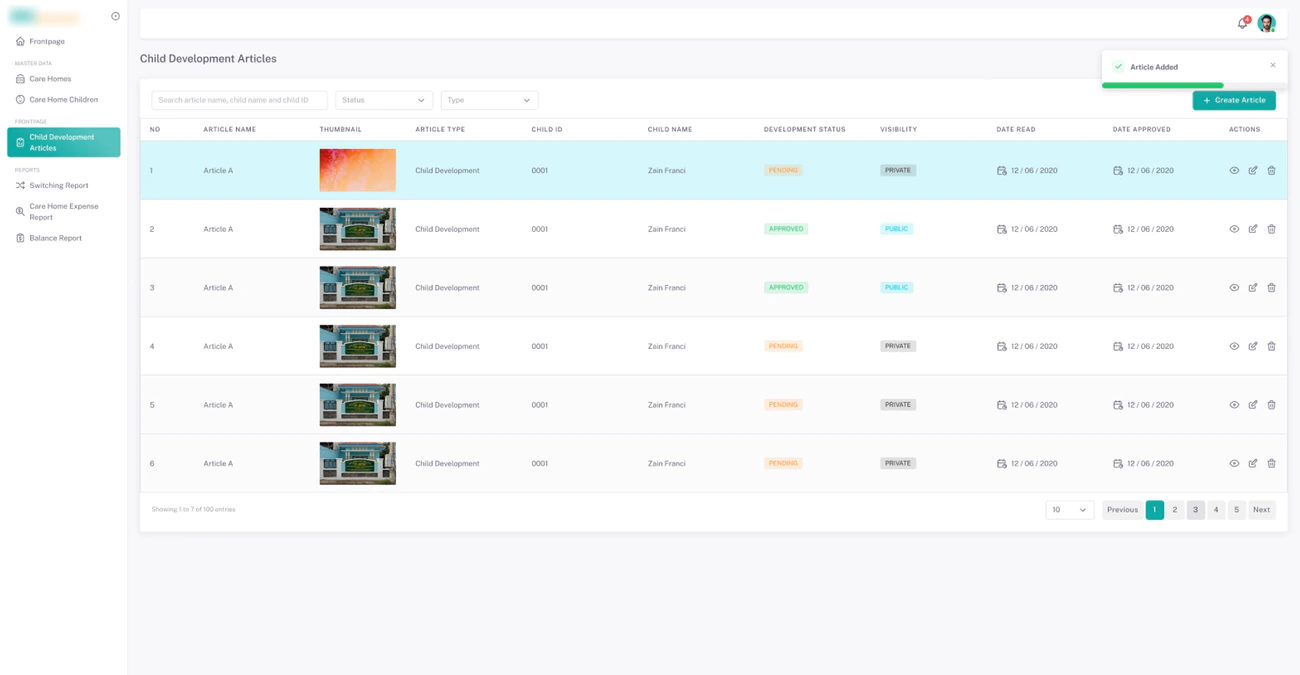
Some screens that shipped. Company name is blurred because of NDA.
I turned one line per feature into 68 cases across 12 modules. Each case is ticked against 5 roles and what they can do: create, view, edit, delete or other. The unhappy paths are written in: a wrong password, "can't delete the only super admin", an empty required field. It also shows which modules depend on which, with my estimate in days for each.
Then I drew a swimlane for each module and built the prototype from the swimlanes, using the same numbers in all three. So the sheet, the flows and the screens always match.
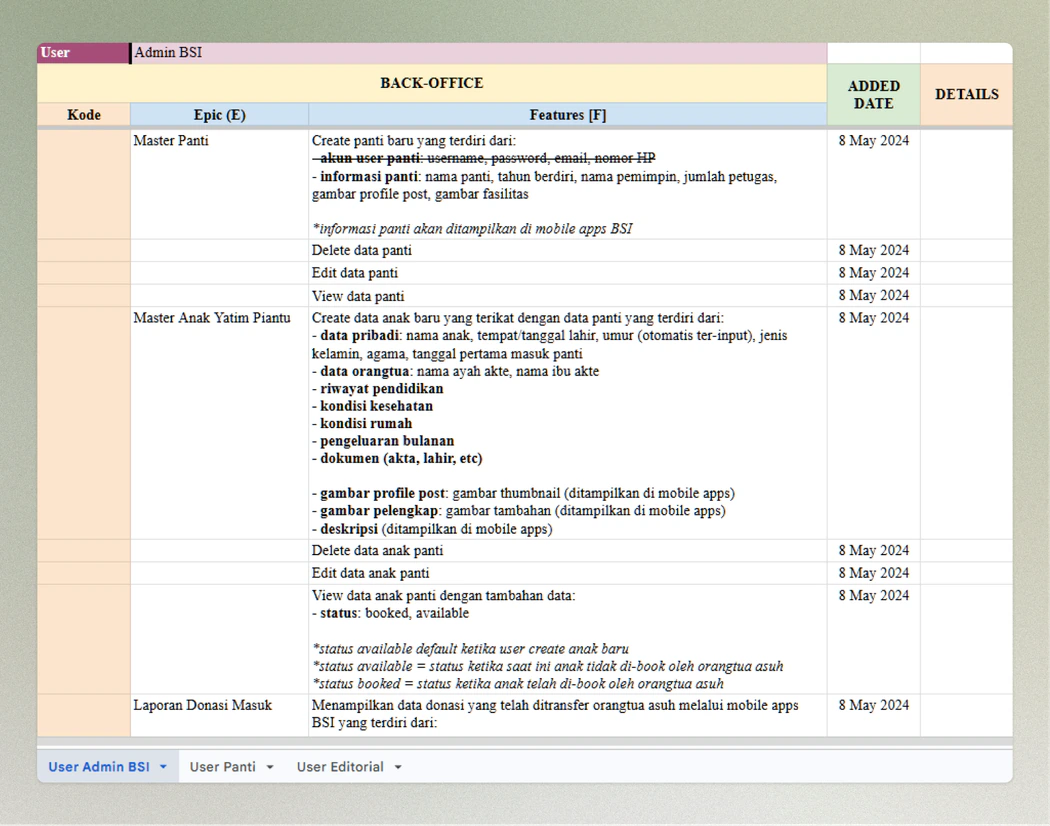
The feature list the PM gave me.
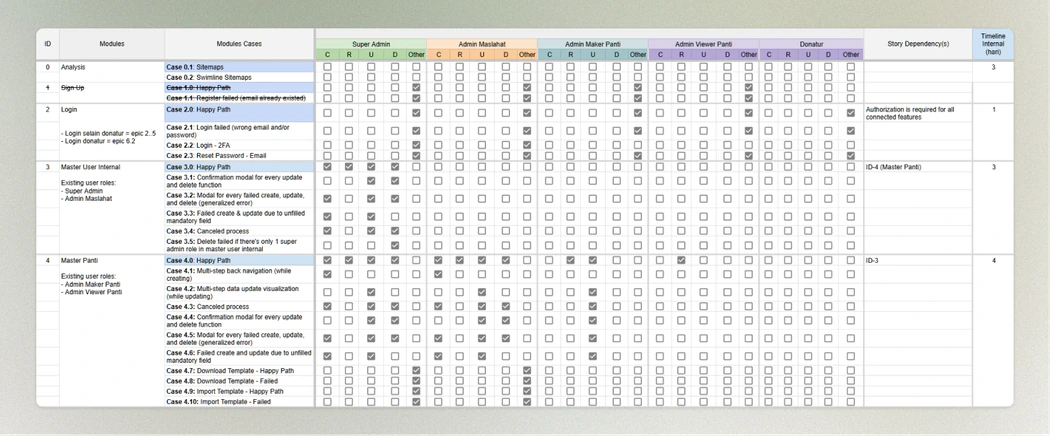
My rewritten feature list, numbered to match the prototype for hand-off and tracking.
That's how the pawnshop project lost track of what changed.
One numbering across all three, so any change points to one exact place.
With five kinds of users, a prototype alone can't show who is allowed to do what, and engineers can't check their work against it.
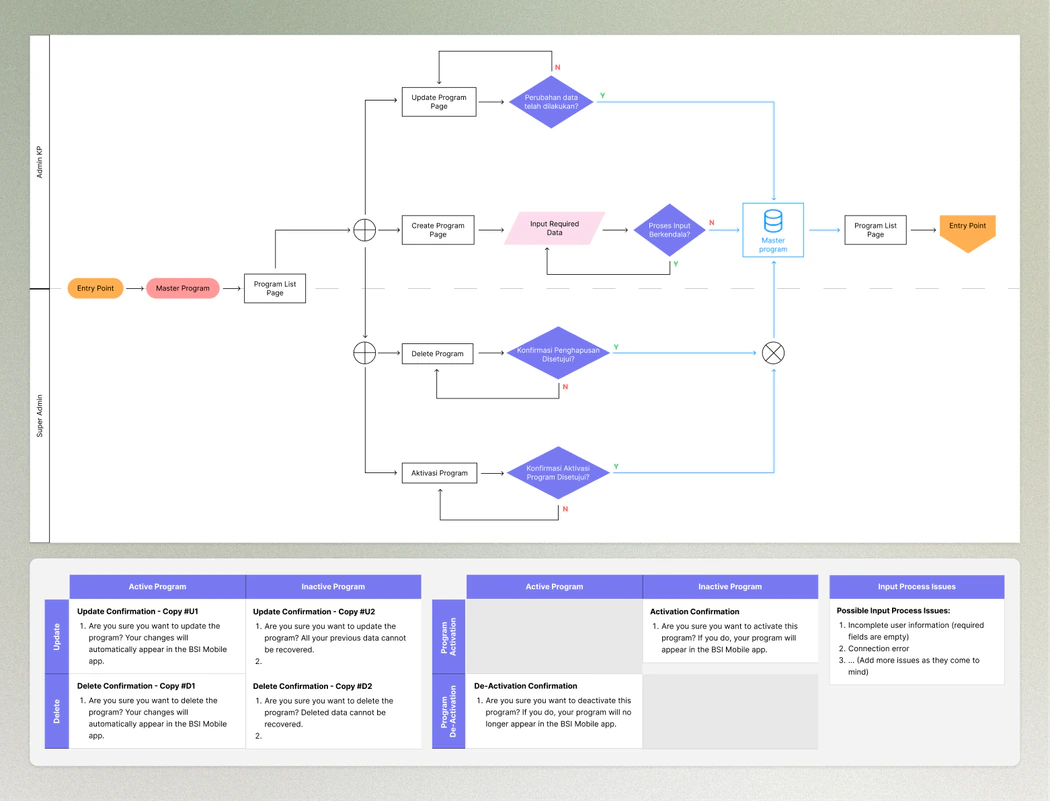
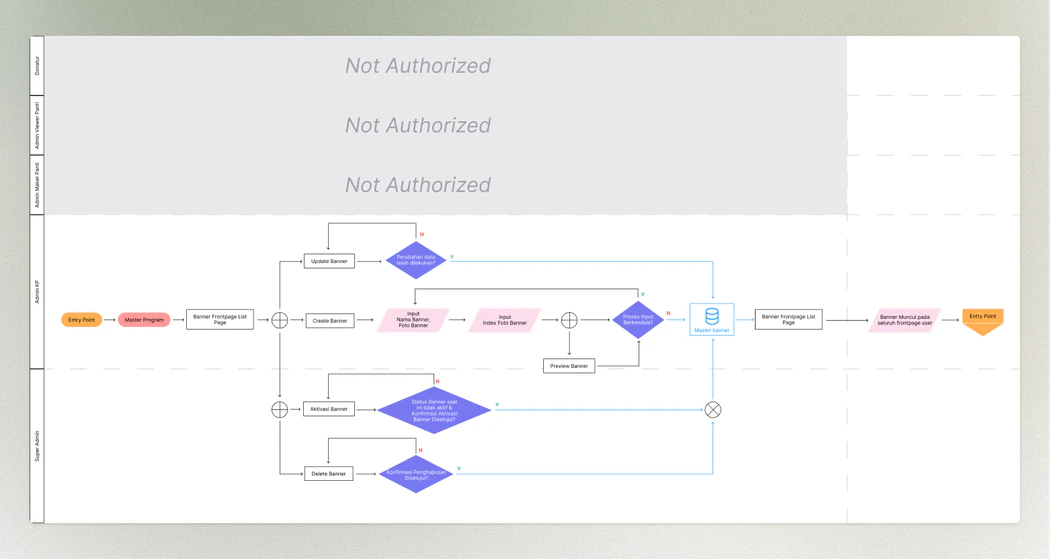
2 of the 8 swimlanes, one per module.
Handing over the prototype on its own. It shows the screens, but not the rules.
One lane per role, with grey "not authorised" zones and every yes/no decision drawn. I built the prototype from the swimlanes and split it by the same module numbers. So the sheet, the flows and the screens always match.
I had built my own design system for the pawnshop project, including the colour system. For this project, the company bought a ready-made admin kit that came with code. I built on it, because engineers could start right away. With mine, they would have had to rebuild every style in code first.
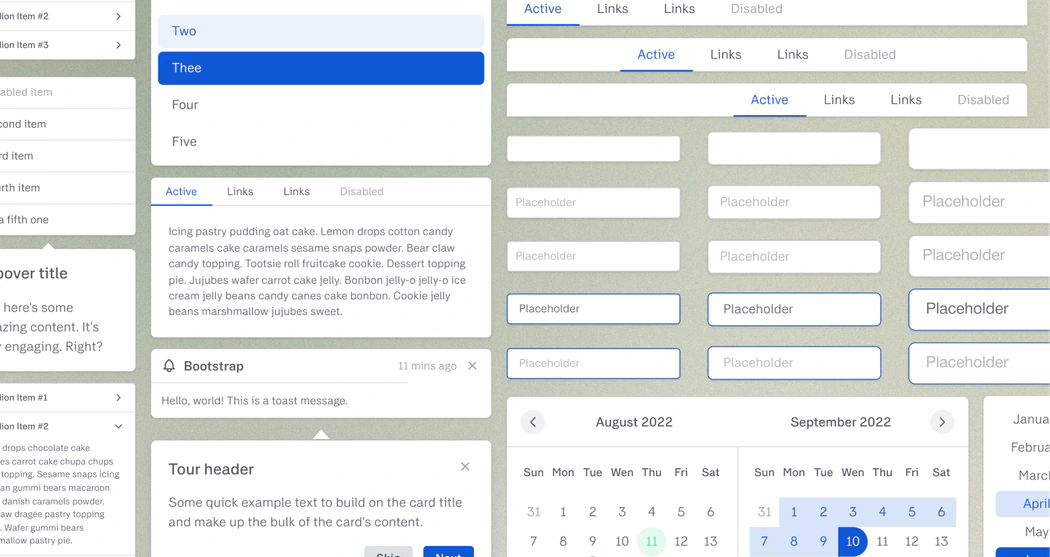
A design system that only lives in Figma makes engineers build everything twice.
I put my effort into the hand-off instead.
Engineers asked me few questions about the prototype. When something needed changing, I could point to the exact step, the role and the reason.
Count questions and rework per module, so the hand-off has numbers behind it.
On any product with several roles, write the case sheet in the first week.