Shipped 2024

Pawnshop System Case Study
[1] The challenge
A pawnshop group with about 150 branches was losing money it couldn't explain, and nobody had written down how the system should work.
[2] The basics
Where does the money go missing? How the system is organized and every screen, for 5 kinds of users, from the branch counter to head office.
[3] The details
Zenmirai, Dec 2023 to Feb 2024. Shipped.
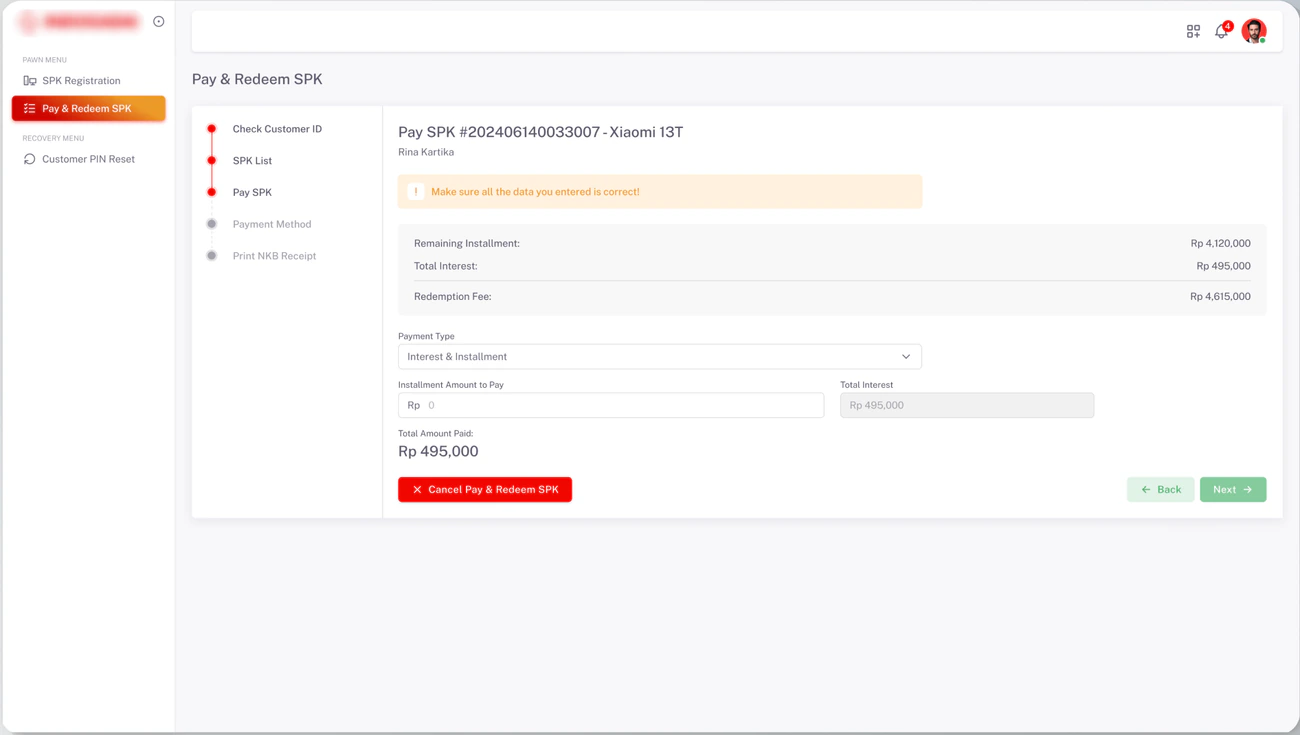
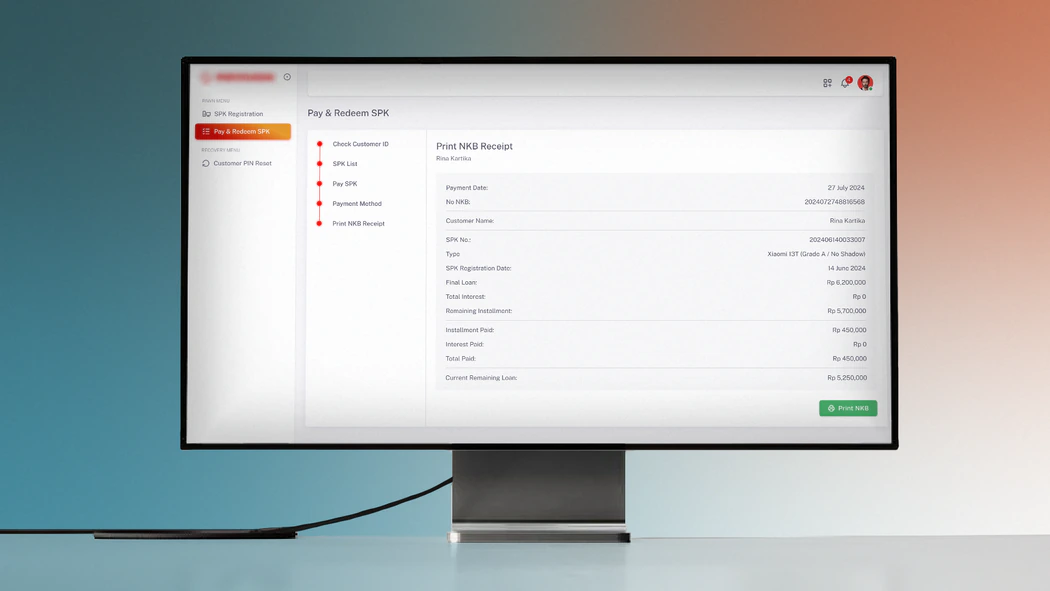
The pawnshop system on a desktop monitor: the Pay & Redeem SPK screen at its last step, printing the NKB receipt with the customer's loan and payment summary.
Prologue
What would happen if a business had no reliable system to protect it?

Some time ago before this project began, the owners asked staff to record attendance in their own app. Staff hung a fake company background behind them and took a selfie.

What the staff didn’t know, the app also took a photo with the back camera. That’s how the owners caught it . . . and this was only 1 story out of many.

“They are too smart. They can find even the tiniest loophole.”
Overview
My role
Product designer
Sole designer
My team
1 PM, 1 Engineer
With 1 PM intern
Platform
Desktop web app
Plus mobile app design that’s not shipped
Status
Shipped
In use by client
Timeline
Dec 2023 – Feb 2024
Excludes later design adjustments

Over 200 screens shipped.

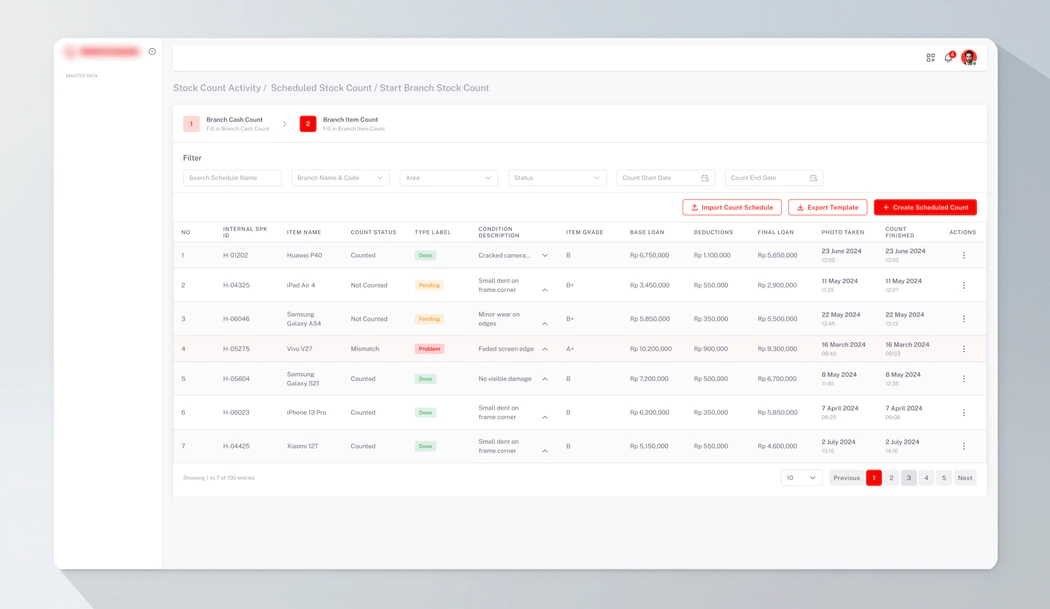
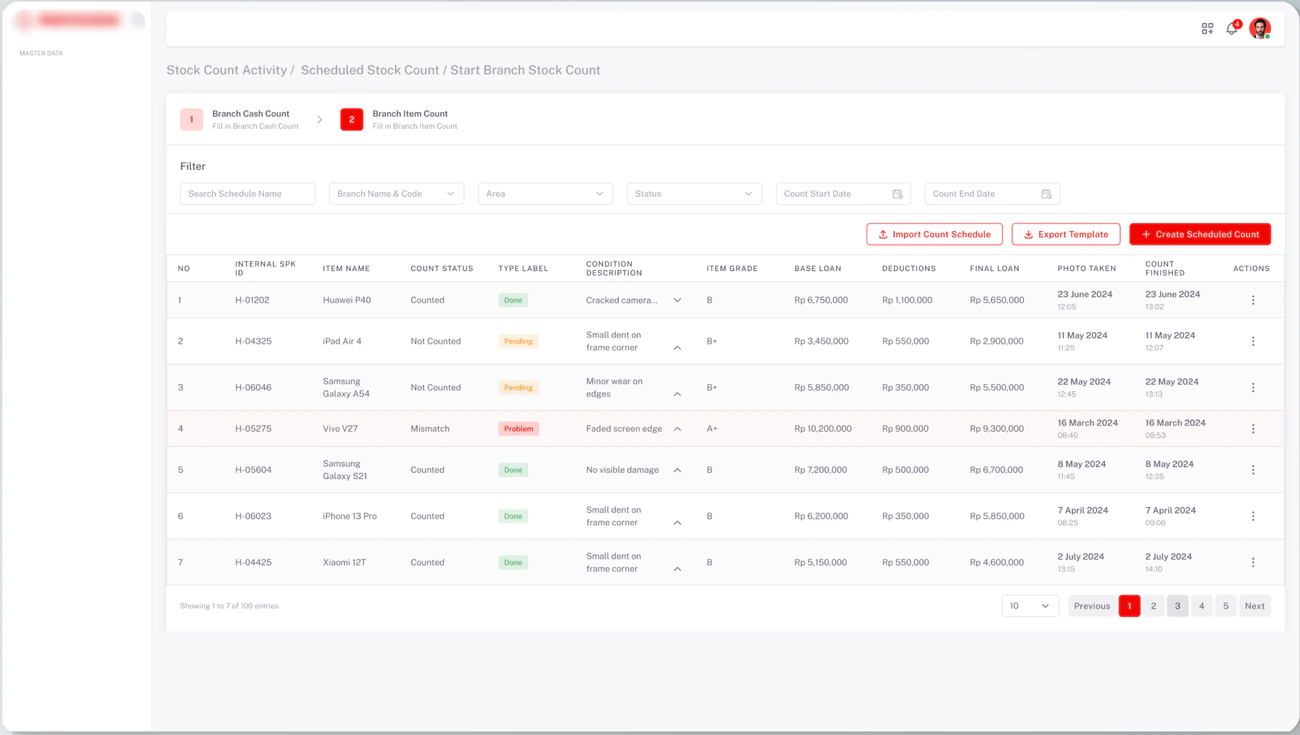
Branch stock-count screen: cash and item counts per branch, with item status, condition, loan values and photo times.
All branch-office cash and inventory are routinely audited and recorded in the system.
Scope & Ownership
150 branches. 5 user personas. 1 system. 1 designer.

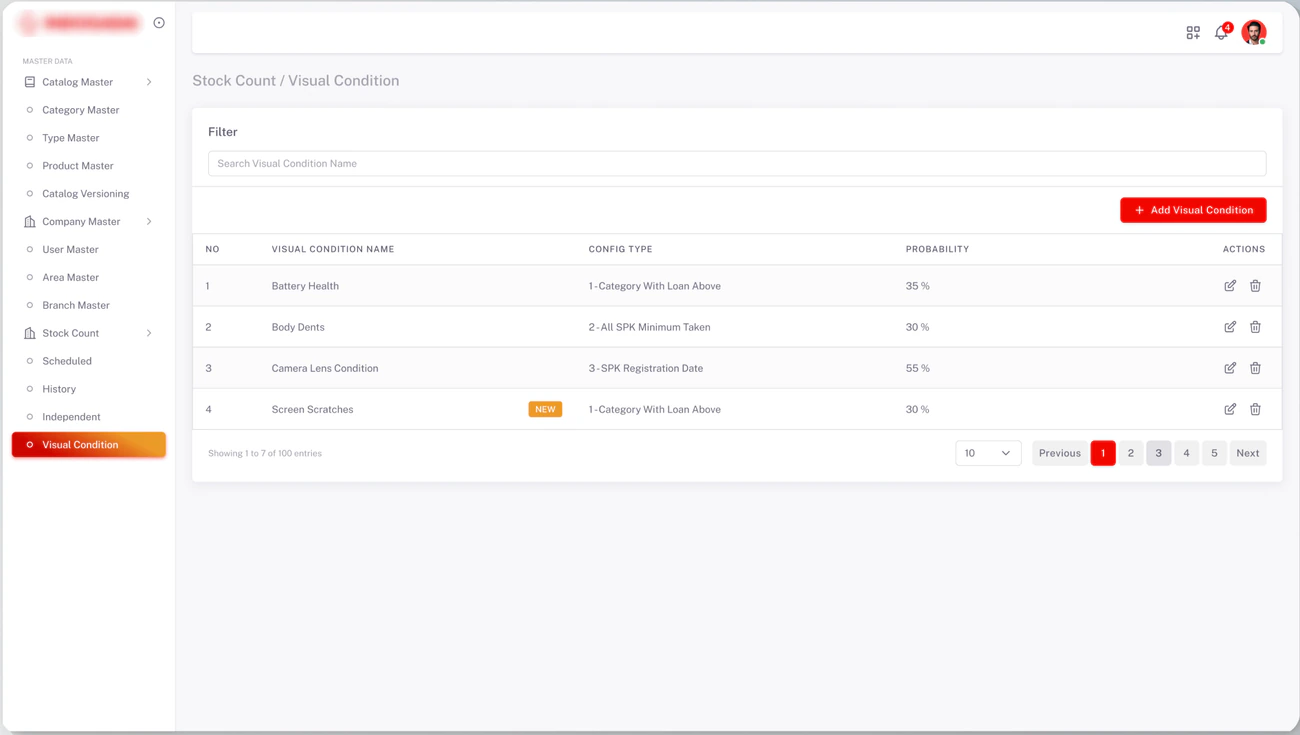
Some screens that are built for 5 user personas across 150 branches in Indonesia. Every flow, case and artefact was built around those personas.
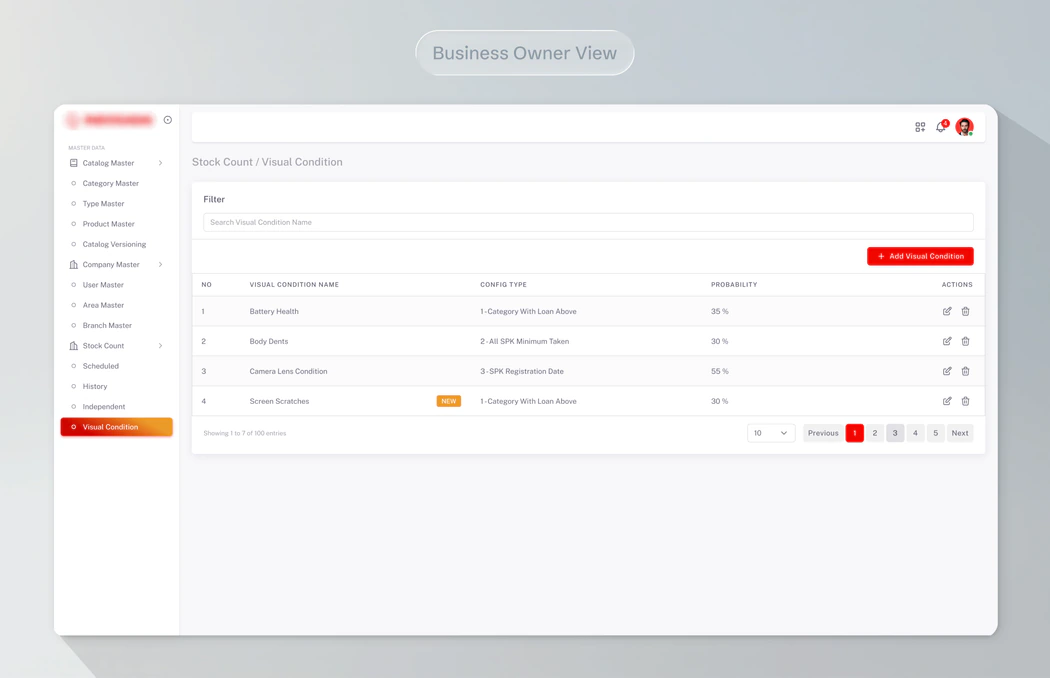

Business Owner View

The Broken Rules
What existed, what broke, and what survived

The owner already had rules that worked on paper. The problem is people can just write whatever number they want and nobody checks it. Important values and status changes could be changed without a reliable record, and that hurt the business.

Instead of building a new workflow, I used the existing one as a foundation and moved each step as it was into the system, then made every step leave a record.
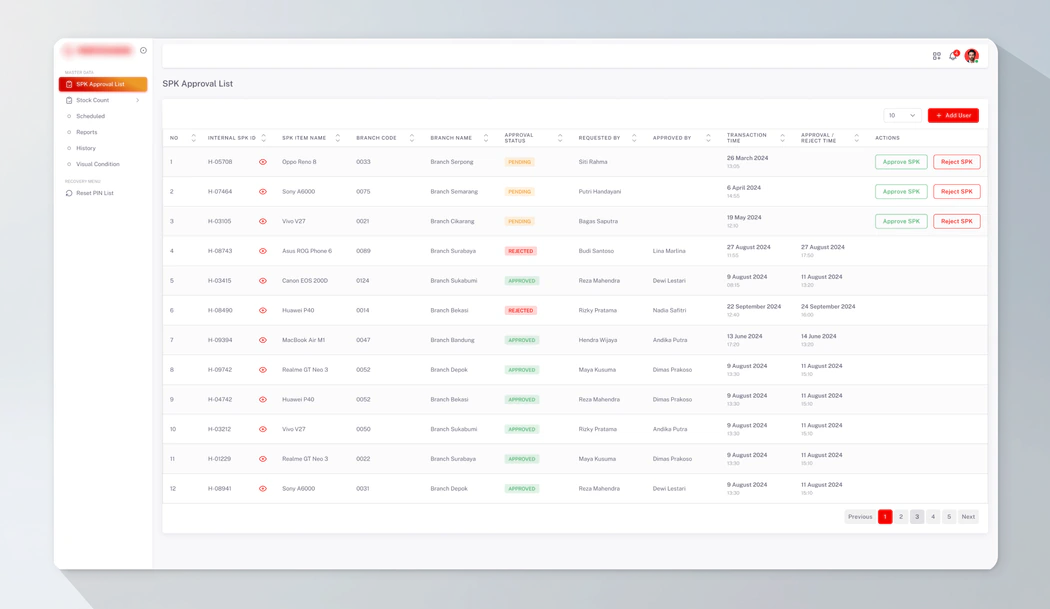
SPK approval list for head office: loan requests above the price limit, each waiting to be approved or rejected.
Transactions exceeding the set price threshold require main-office approval. The eye icon identifies high-value items, as defined by stakeholders based on price.
~ The question ~
How do you close a loophole without making the branch work around the system?
Decision 1
Stop the number from changing

A paper receipt created the first loophole. An item worth Rp1 million could become a Rp2 million loan on paper, with the difference disappearing.
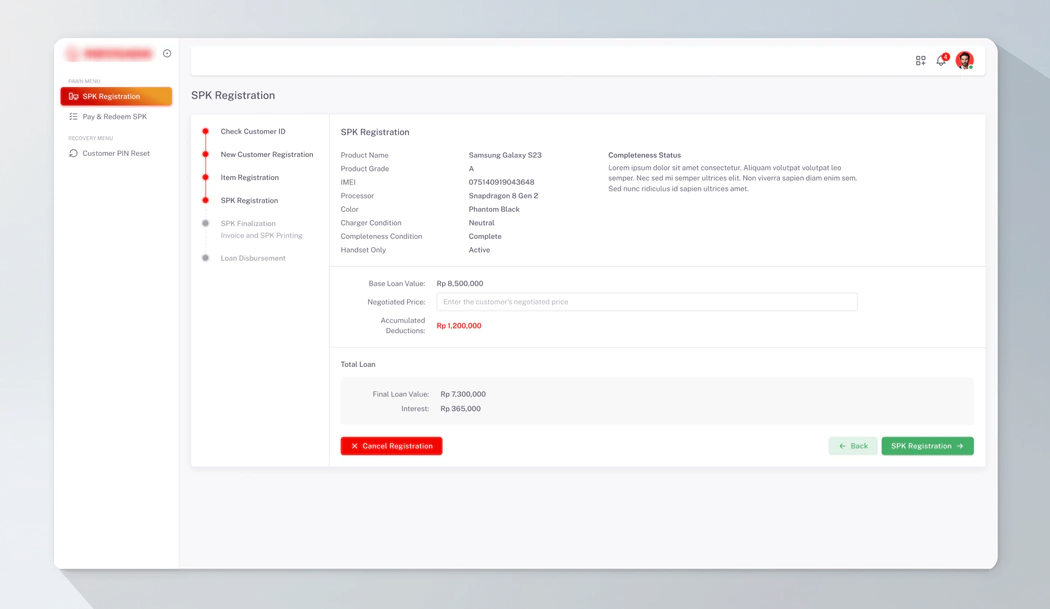
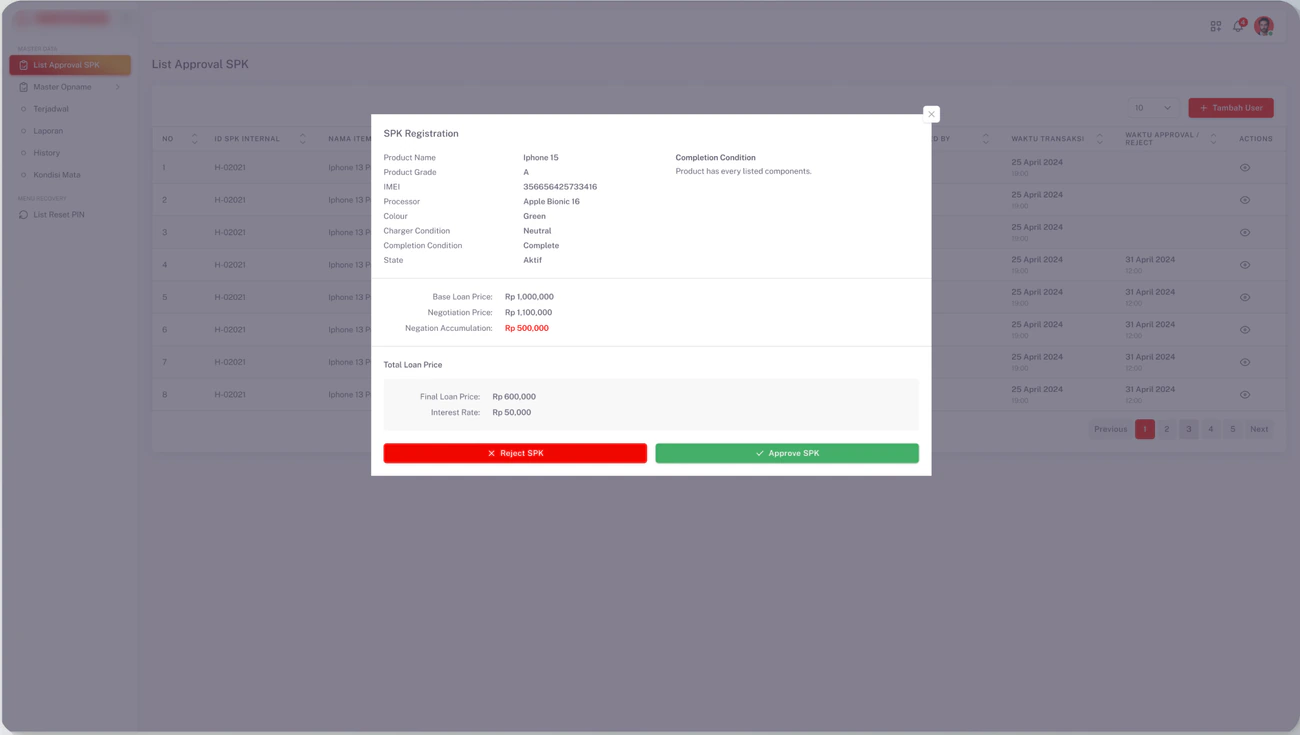
SPK registration screen: the head-office base loan value next to the negotiated price, with deductions and the final loan.
The base loan comes from head office; negotiated price stays visible separately; larger loans require approval.
Rejected
Fully locked pricing

Branches really do bargain with customers, and a complete price-lock would have pushed staff to find a way around it.

Chosen
Locked price base & visible negotiation

Loans above Rp5 million require head-office approval, and the request expires after 1 day. This preserves the workflow while keeping the controlled value visible.

Decision 2
Trace a pawn across the workflow

The loan is only 1 checkpoint. The stronger question is whether the record survives as the item moves through the business process.
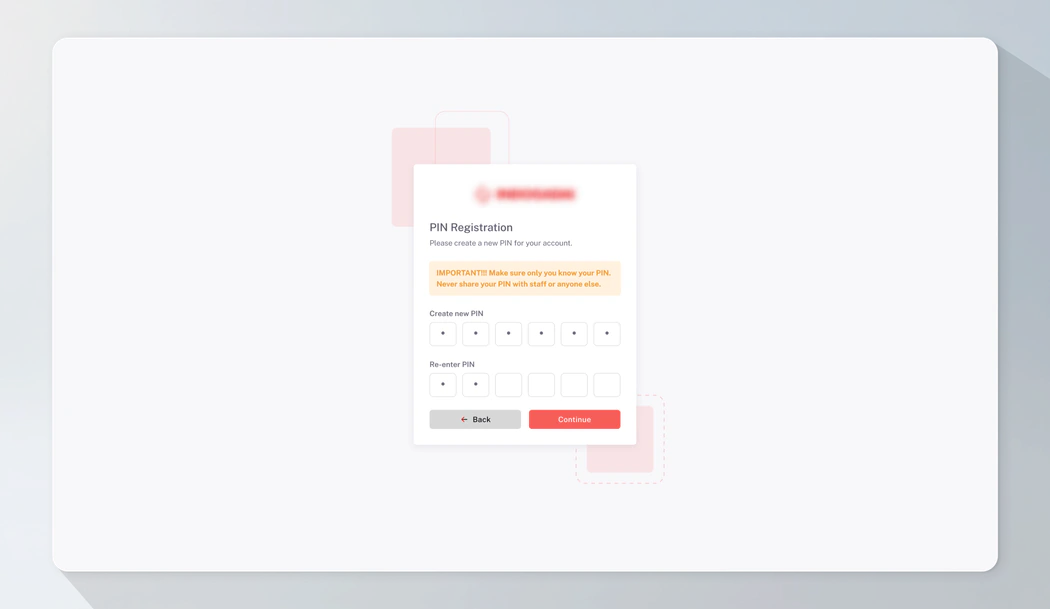
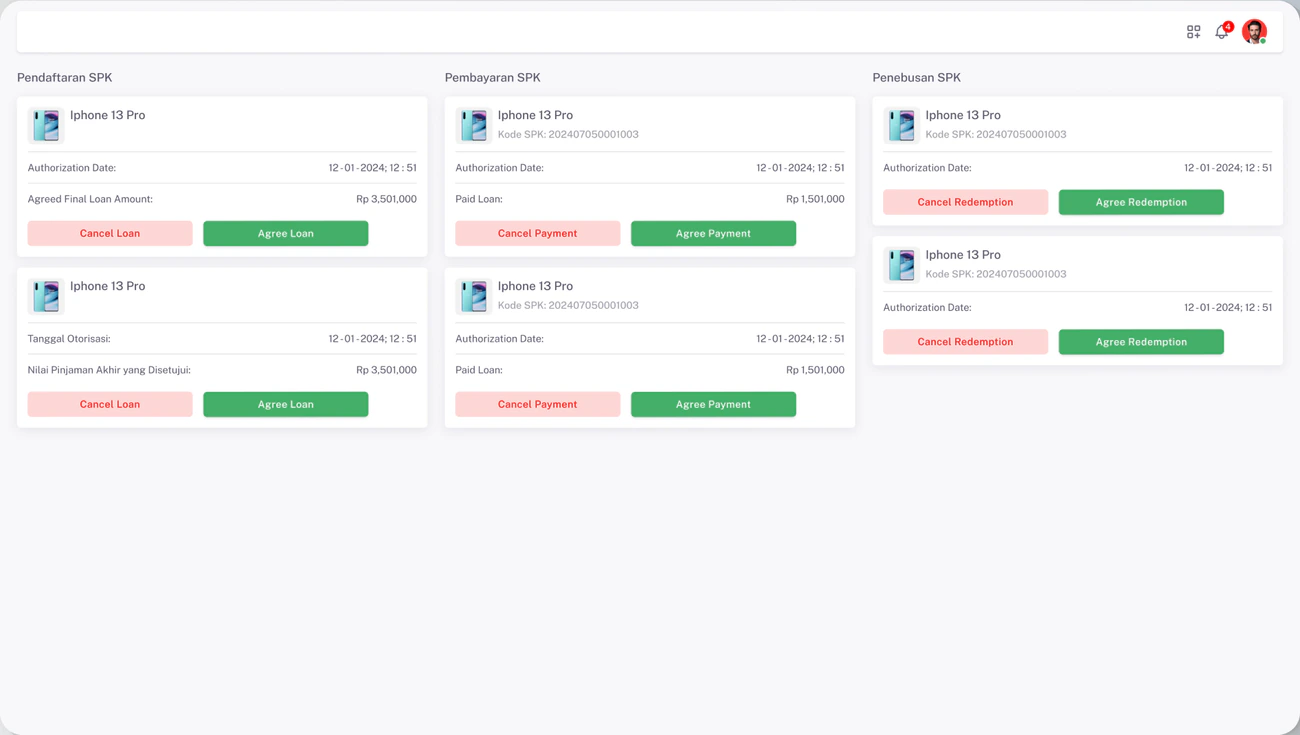
PIN registration: the customer creates a PIN that branch staff never see.
The customer sets a PIN that staff cannot see, it is required to redeem the item. Controlling the loan didn't prove the item was still there.
Decision 3
Make the stock count leave evidence

Head office used to check items from a paper list. When something was missing, nothing tied it to a person, a place or a day.
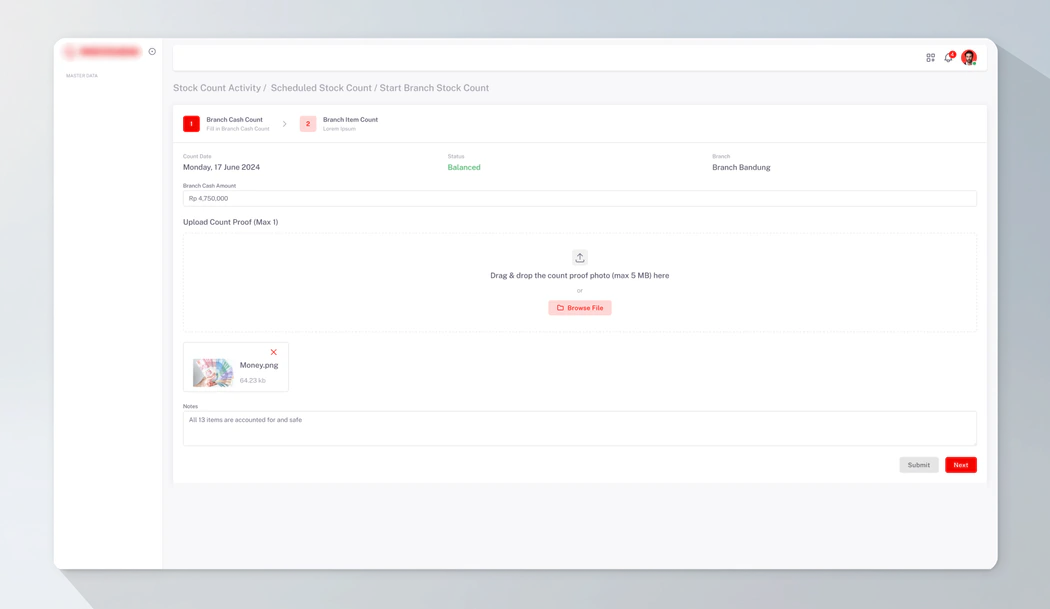
Branch cash count: counted amount, status Balanced, and an uploaded photo as proof.
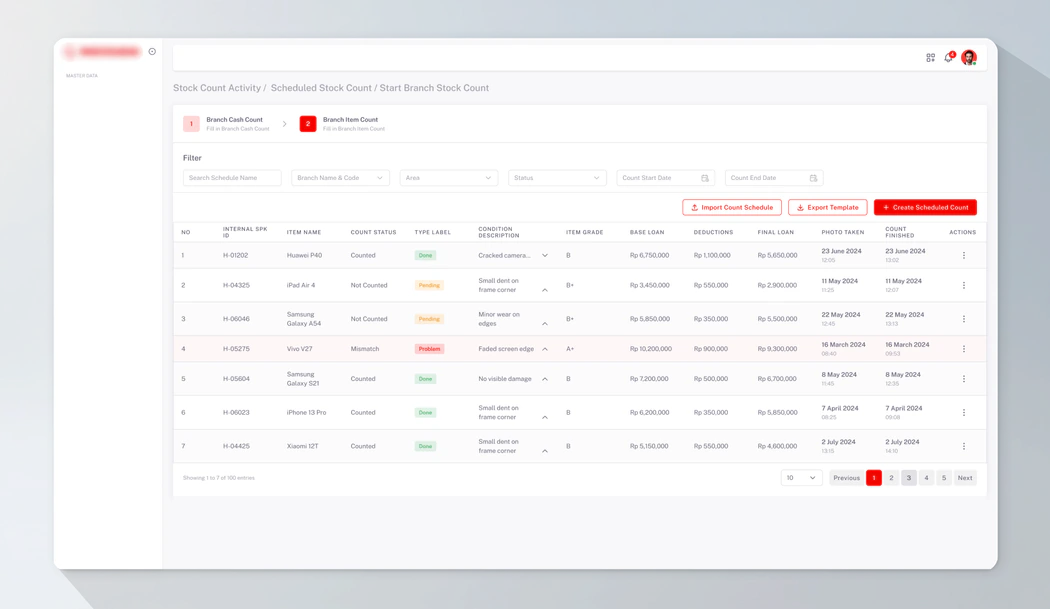
Branch item count: each item with its count status, condition, grade, loan values and when its photo was taken.
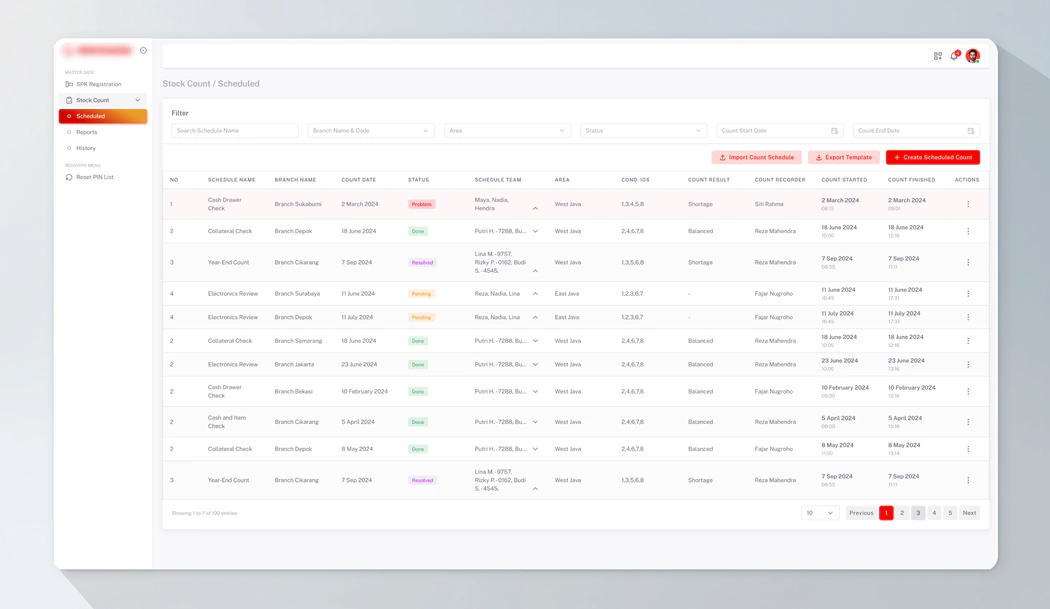
Scheduled stock counts across branches, with status, team and results.
Rejected
More CCTV in branch offices

Nobody would watch the footage and it would cost too much to pay security staff. I put the proof inside the workflow instead, where the discrepancy happens.

Aftermath
The system shipped and went into use at the client.
Reports & feedback

I didn't receive usage reports after handover, so I don't have outcome numbers to claim. The feedback I heard was that the text should be bigger.

Evidence

The strongest evidence I can show is therefore the shipped scope and the controls in the product itself: locked values, evidence checkpoints, item checks and visible resolution states.

Epilogue
I kept the design history visible

Requests arrived verbally, often weekly (even daily), and sometimes changed again later. There were no tickets. I suggested Jira, but there was no time to set it up.

Dated change and situation notes kept old versions explainable when requirements changed.

I made the record part of the file. Each changed screen got a dated change note and a situation note, while the old version stayed intact. I reused screens where possible so keeping history stayed cheap.

Rejected
Overwrite the screen

Faster in the moment, but the previous request, version and reason disappear.

Chosen
Keep the history in Figma

A lightweight record inside the working file when a separate ticketing system wasn't available.

Reflection
What I'd do differently
Scope

Agree every use case before drawing, so new requests are visibly changes.

Change

Ask for each change in writing before it becomes another screen revision.

Environment

Test text size on branch laptops earlier.

The product needed important actions to leave a record.
The project did too.