AI Social Media Tool for FnB
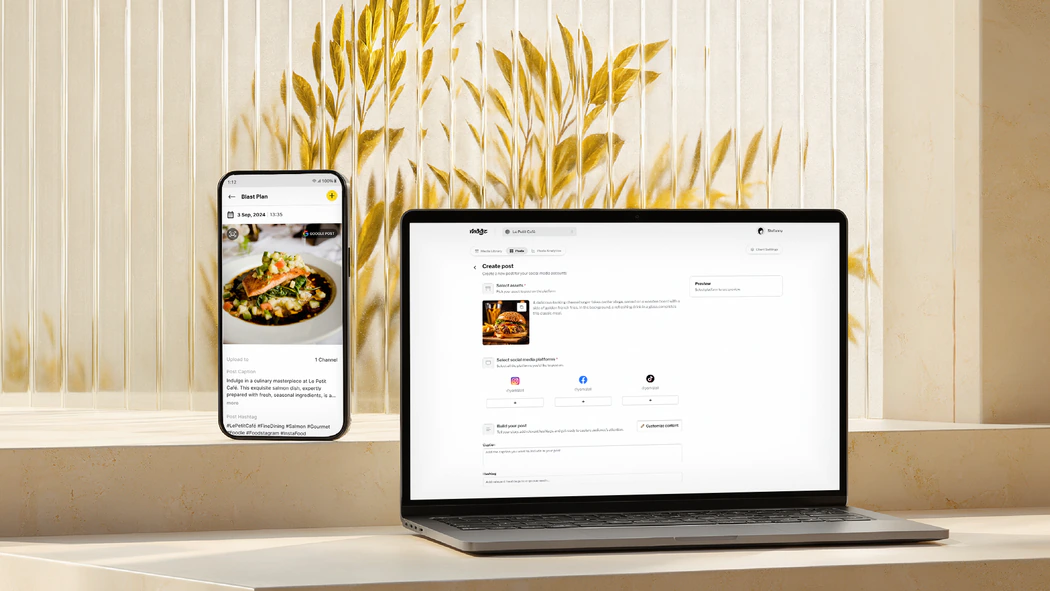
I changed Mooz from trying to replace a cafe’s social-media manager into a tool that helped them publish more consistently across platforms.
Ownership: I defined the scope, flows, screens, research, AI rules and prompts, cold-calling, and getting the FnB owners to participate in the pilot project.
Cafes and restaurants in Indonesia live on social media, but the person who manages it is often the manager of the kitchen and customers.
I was the product designer on Mooz’s 2-person founding team. The original product was built around taking the social-media work over.
Then one of the FnB managers tried our mobile concept and asked…
This was the question that changed what the product was for.
The original model was essentially a social-media agency in software. The cafe handed over its assets (food photos, videos, raw material) and Mooz handled their social media completely.
The user's first action is uploading their assets, which serves as the entry point and core concept of the app.
The early mobile concept that showed us it would flop.
The manager’s reaction exposed the conflict: we were solving the business problem by removing the person we needed to serve.
So, my founder and I agreed to rework the full “we run your socials” model because it asked cafes to give up control. One pilot owner had already turned down social media agencies for exactly that reason.
So, I changed the product scope and the underlying experience around that goal.
The original plan asked AI to generate the content and learn what performed. It wasn’t reliable enough to put all of that in front of customers.
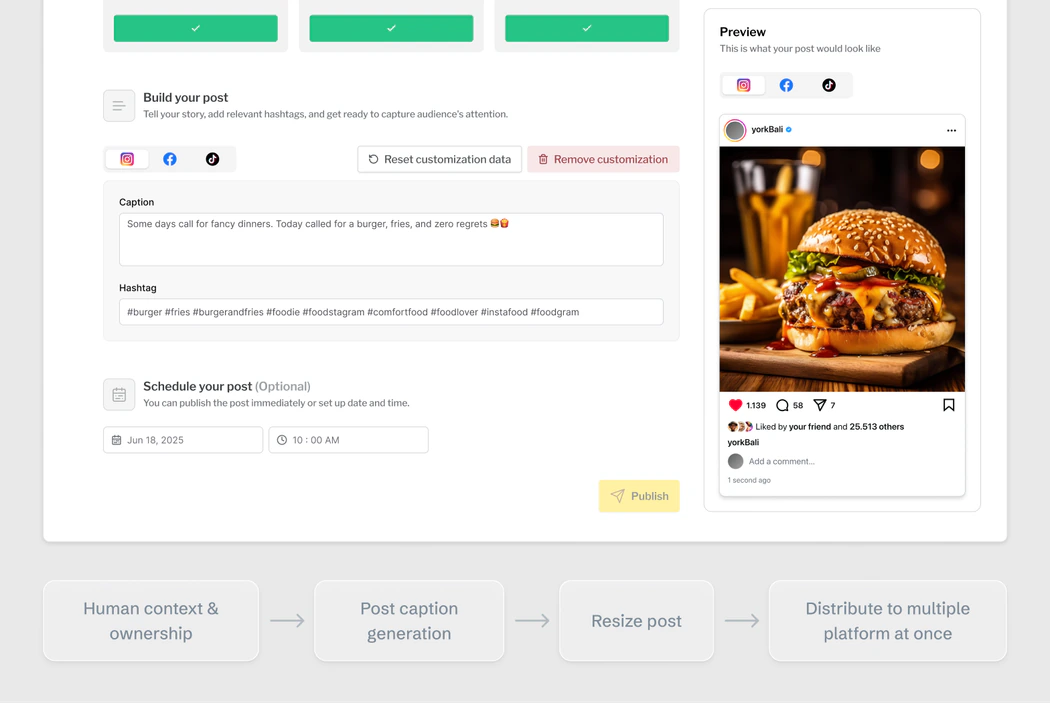
Everything else became straightforward automation:
1 upload → Instagram + Facebook + TikTok.
I deliberately left AI-generated visuals and AI performance analysis for later rather than expanding the product beyond what we could support reliably.
I designed how the system inferred the cafe’s voice, including the rules and prompts. The founder built the front end and back end.
Managers wanted less work, so approving every post would recreate the job we were trying to remove.
But publishing automatically introduced a different risk.
So instead of adding a review queue, I moved the safety work upstream.
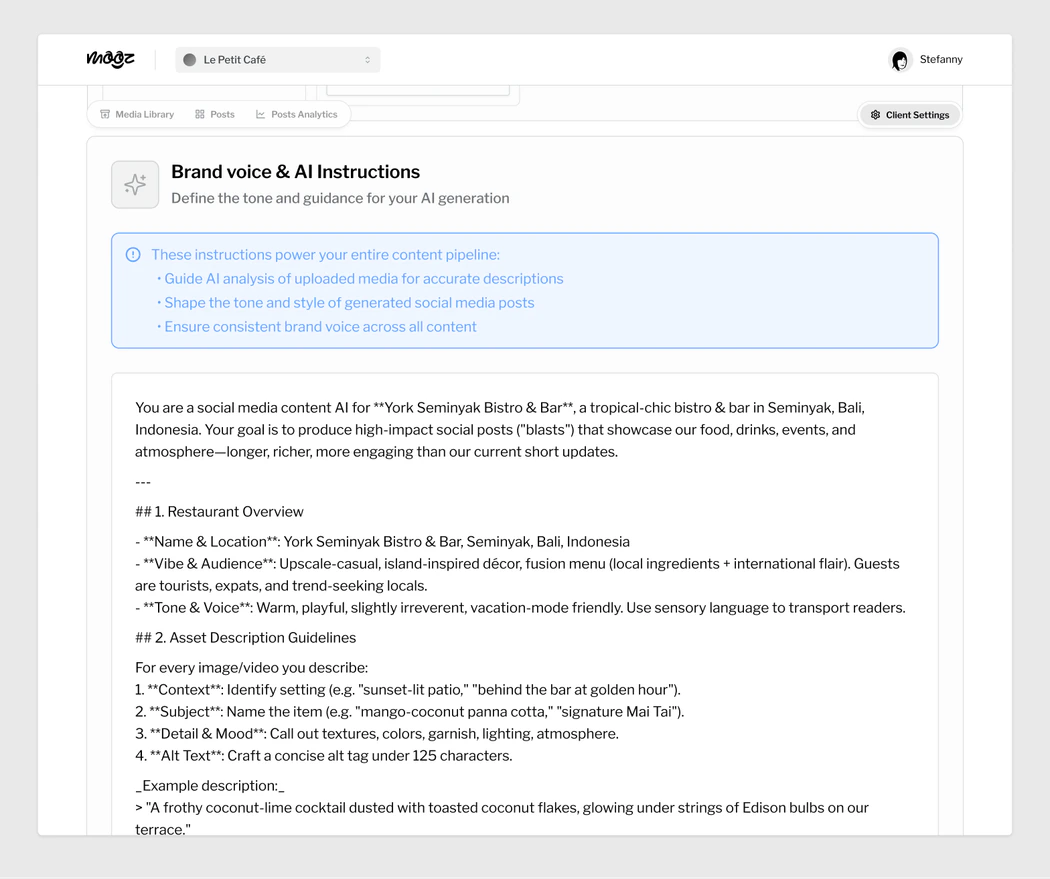
The resulting division of responsibility was simple:
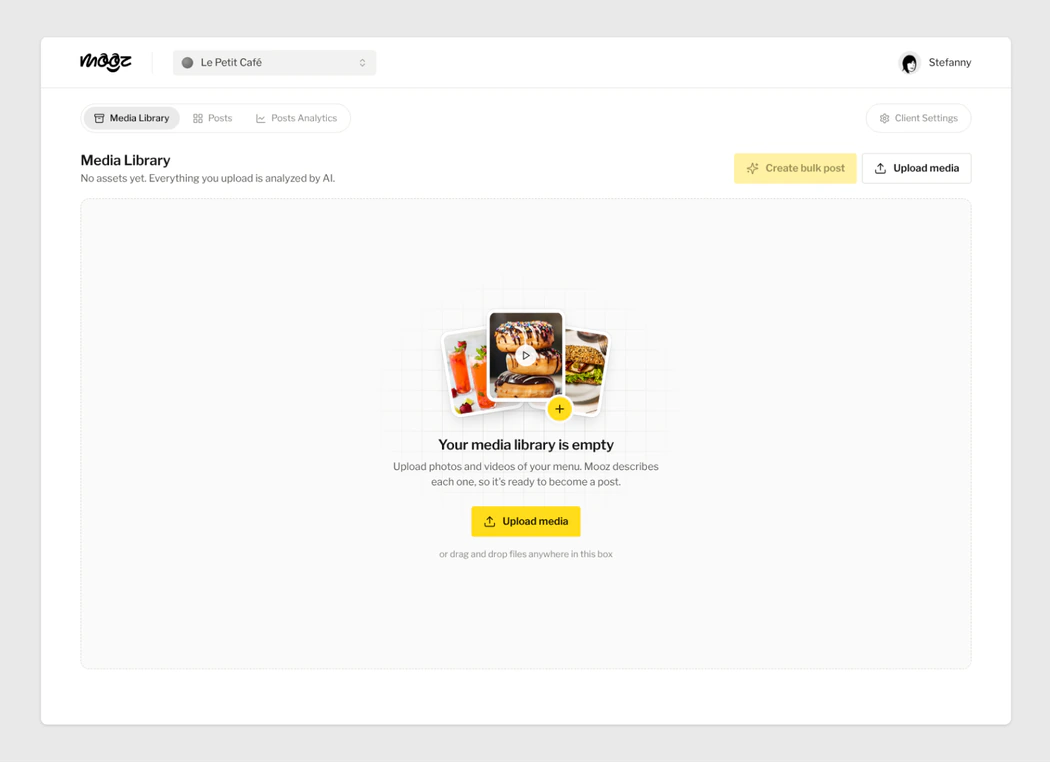
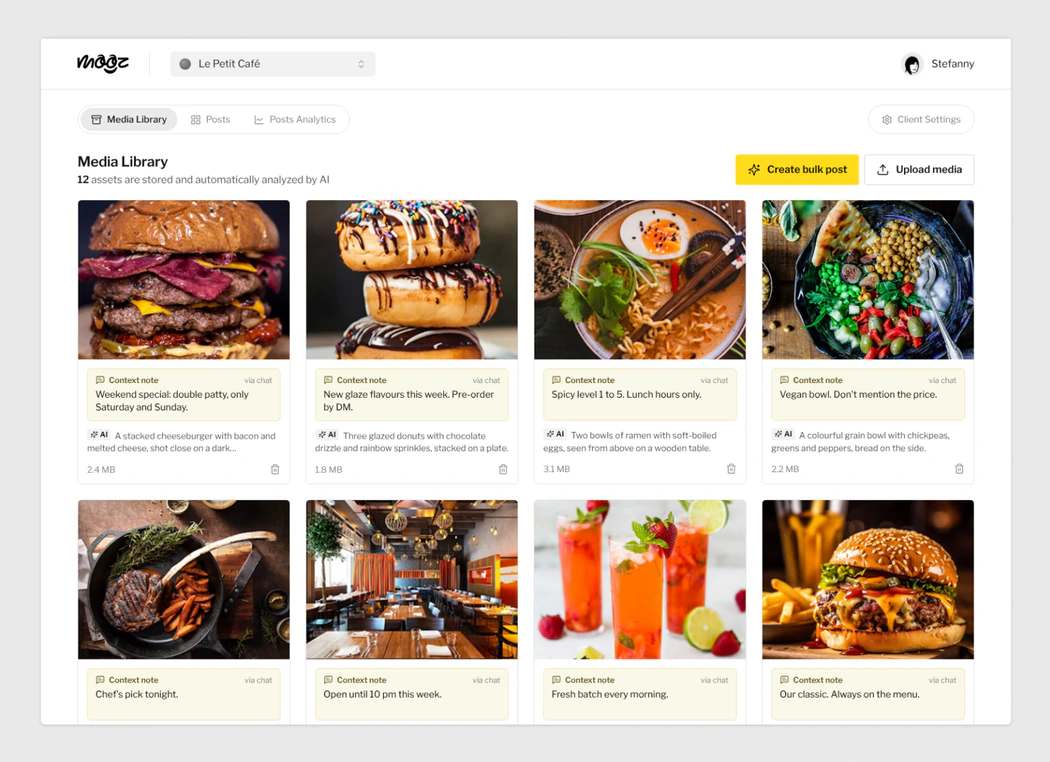
The final product was a desktop dashboard built around 1 principle:
It shipped to 3 pilot cafes from June to September 2025, with 3 connected platforms per cafe.
No incorrect posts were reported during the pilot.
Check aspect ratio, file size, duration, codec and caption limits before scheduling.
Connect posts to each platform’s analytics and the customer journey.
The most important discovery happened before the dashboard: the product was solving the wrong problem. We learned that after building the mobile concept.
I would put the concept in front of managers faster than before.